Planning a Kenya safari from Thailand is more straightforward than most people expect, but the information online is often written for Americans or Europeans. This guide covers Kenya safari planning for Thai speakers. It walks through the visa process, the flight from Bangkok, the budget in baht, and the honest trade-offs between seasons. You do not need a tour package to understand the basics, and you should not book one until you do.
What Does Kenya Safari Planning for Thai Speakers Involve?
Kenya safari planning for Thai speakers means solving problems that most general guides skip. That includes the eTA process, the realistic flight time from Bangkok, how far your baht will stretch, and which months suit your schedule. The sections below answer each in order, with prices and timelines you can check for yourself.
Do Thai Citizens Need a Visa or eTA for Kenya?
Yes, Thai passport holders need an electronic Travel Authorization, or eTA, before flying to Kenya. Kenya replaced the old visa system with the eTA in January 2024, and there is no visa-on-arrival option for Thai citizens.
The application asks for your passport details, flight itinerary, and proof of accommodation, plus a recent passport photo. The process is entirely digital, so you do not visit an embassy.
Plan to apply at least two weeks before your departure. Most applications are processed within a few days, but some take longer, and a rushed application is not worth the stress.
How Much Does the Kenya eTA Cost and How Long Does It Take?
The government fee for the Kenya eTA is $34 USD per person, and this is the official fee as of 2026. Some third-party websites charge extra to process it for you, which you can avoid by using the official Kenya eTA portal.
Processing time is usually three to five working days. It can be faster, but allow a full week to be safe, and do not book non-refundable flights until your eTA is approved.
One note for Thai travelers: the eTA is linked to your passport number. Double-check that you type it exactly as it appears on your passport. A single digit error can delay approval.
Is There a Direct Flight from Bangkok to Nairobi?
Yes. Kenya Airways operates a direct flight between Bangkok (BKK) and Nairobi (NBO) several times per week, the only direct link between Thailand and Kenya.
The flight time is roughly nine to ten hours, the shortest way to get there. If you prefer more options or a stopover, you can fly with Middle Eastern carriers like Emirates, Qatar Airways, or Etihad, connecting through Dubai, Doha, or Abu Dhabi. Those flights take longer, usually 12 to 15 hours including the stop.
From Nairobi, most safari itineraries begin with one internal flight to the Maasai Mara, Amboseli, or Samburu.
What Is the Best Time of Year to Visit Kenya for a Safari?
Kenya has two dry seasons and two wet seasons, and each one changes what you will see.
The dry season from late June to October is the classic safari window. Grass is short, animals gather at water sources, and this is when the Great Migration is usually in the Maasai Mara. Wildlife viewing is at its peak, but so are prices and crowds.
The short dry season from January to February is another good option, with fewer tourists and lower prices than the peak migration months.
The wet seasons run from March to May and again in November to December. The long rains make some roads muddy, and many lodges close. The short rains are lighter, but wildlife viewing is more scattered because water is everywhere.
If you want to see the Great Migration river crossings, plan for August or September. If you want high wildlife density without the peak price, go in February.
| Season | Months | Wildlife viewing | Crowds and price |
|---|---|---|---|
| Long dry season | Late June to October | Peak, Great Migration in the Mara | High crowds, highest prices |
| Short dry season | January to February | Strong, concentrated around water | Lower crowds, lower prices |
| Long rains | April to May | Scattered, some lodges close | Low crowds, lowest prices |
| Short rains | November to December | Scattered but active | Moderate crowds, moderate prices |
For a fuller breakdown of animal behavior by month, see our best time to visit Kenya guide.
How Many Days Do You Need for a Kenya Safari?
A first safari should be at least five full days on safari, not counting travel days from Bangkok. Seven to nine days is a comfortable length that lets you see two or three ecosystems.
A common first-timer plan is three nights in the Maasai Mara and two nights in Amboseli. That combination gives you the big cats and the elephants with Mount Kilimanjaro behind them.
If you want a third park, Samburu offers a different landscape, including the reticulated giraffe and Grevy’s zebra. Keep in mind that each move between parks costs a half day of travel.
How Much Does a Kenya Safari Cost per Person?
Safari prices vary more than almost any other trip you will take. The main drivers are the type of accommodation and whether you book a private or shared safari.
| Safari tier | Price per person per day (USD) | What is typically included |
|---|---|---|
| Budget | Under $200 | Basic camps or lodges, shared vehicle, fewer amenities |
| Mid-range | $250 to $400 | Tented camp or lodge, meals, park fees, shared 4×4 with guide |
| Luxury | $500 to $1,500 | Private vehicle, premium camps in private conservancies |
For a first safari, mid-range is the sweet spot between comfort and value. Budget safaris exist and can work, but you often sacrifice vehicle quality, guide experience, and location.
To see a detailed breakdown of what drives the cost, read our Kenya safari cost guide.
What Is the Difference Between a National Park and a Conservancy?
National parks and conservancies both protect wildlife, but they work differently.
National parks are run by the government and open to all visitors. Rules are strict, vehicles can crowd around a lion sighting, and park fees are set by the Kenya Wildlife Service.
Conservancies are privately managed pieces of land, often owned by Maasai communities or private ranchers. Visitor numbers are capped and vehicles must stay on designated tracks, which means fewer crowds and more private viewing.
Conservancies charge higher fees than national parks, and that cost is built into your safari price, but the wildlife viewing is often more intimate. Many camps in the Maasai Mara are located in conservancies like Naboisho or Olare Motorogi.
A good rule for first-timers: if your budget allows, include at least one conservancy stay.
When Is the Great Migration in the Maasai Mara?
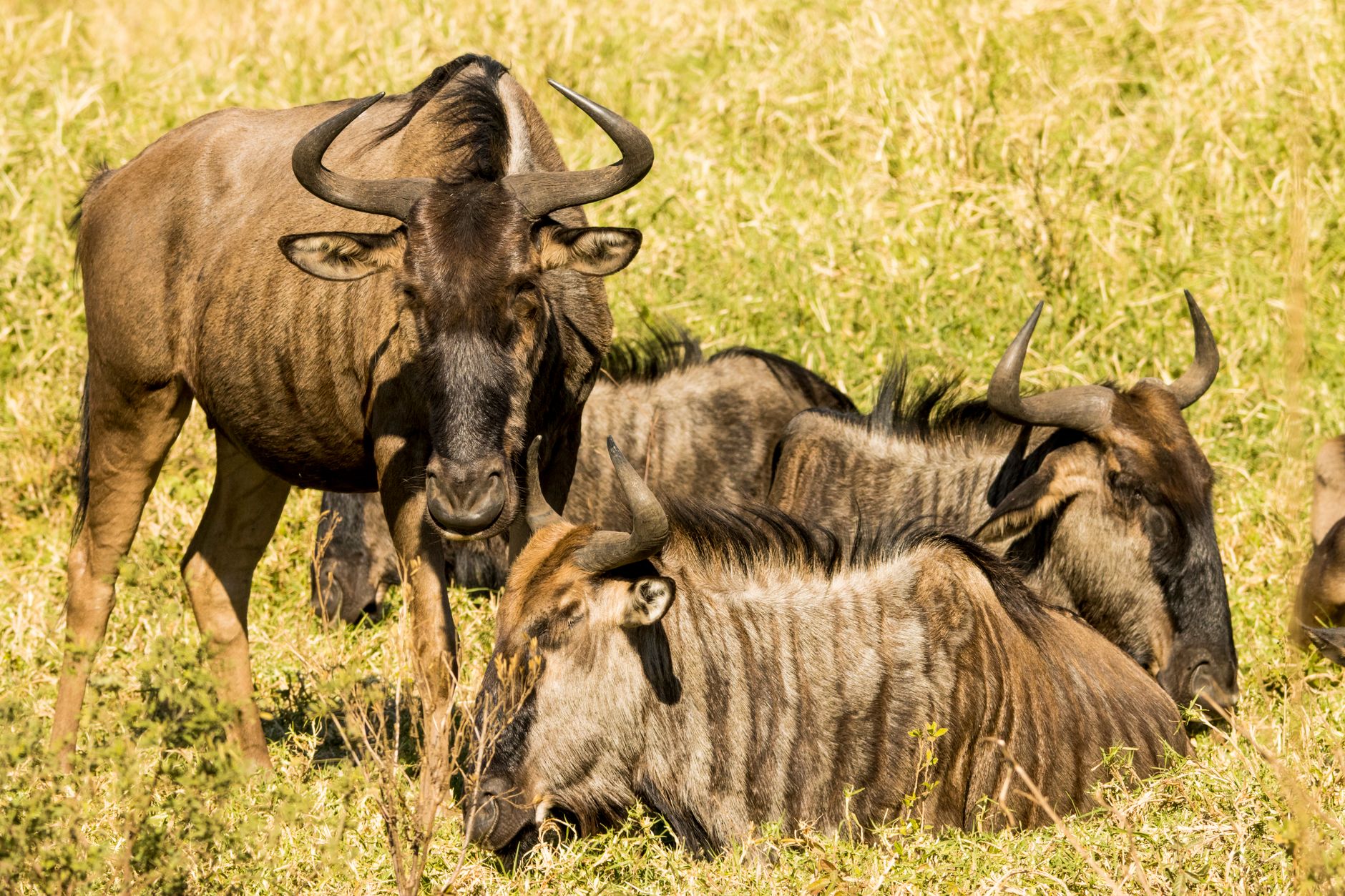
The Great Migration is a year-round movement of wildebeest and zebra between Tanzania’s Serengeti and Kenya’s Maasai Mara. It does not start or end on a single date, and the herds follow the rains.
In the Maasai Mara, the herds usually arrive around July and stay through October. The dramatic river crossings of the Mara River happen most reliably in August and September. By November, most herds have moved back into Tanzania.
If your only goal is to see a river crossing, plan for late August. Even in peak season, crossings are not guaranteed. The herds move based on weather, not a schedule.
Outside of migration months, the Maasai Mara still has resident lions, leopards, and elephants. In fact, January and February often provide better uncrowded views of resident predators.
What Should I Pack for a Kenya Safari?
Packing for Kenya is simpler than most people think. The key is layers and neutral colors.
Daytime temperatures on safari are usually warm, between 20 and 30 degrees Celsius. Mornings and evenings can be cool, especially in July and August. Pack a light fleece or jacket for early morning drives.
Wear khaki, olive, beige, or other earth tones. Bright white clothing disturbs wildlife, and blue and black attract tsetse flies in some areas.
You need sturdy walking shoes, a sun hat, sunglasses, and sunscreen, since the equatorial sun is strong even on cloudy days. A good pair of binoculars is essential for seeing details from a distance, even though your vehicle will have a roof hatch.
For electronics, pack a power bank, since many camps have limited charging points. Bring a camera with a zoom lens of at least 300mm for wildlife photography.
Do not forget insect repellent with DEET, since malaria is present in most safari areas. See our Kenya safari packing list for a full checklist.
What Health Precautions Do I Need Before a Kenya Safari?
You do not need yellow fever vaccination to enter Kenya if you fly directly from Thailand. A layover in a yellow fever endemic country may require proof of vaccination, so check your routing.
Malaria is a real concern in most safari areas, including the Maasai Mara and Amboseli. Speak to a travel clinic at least four weeks before departure for antimalarial medication. Ask them to check routine vaccinations too, including tetanus, hepatitis A, and typhoid.
Drink only bottled or filtered water, avoid raw vegetables in roadside restaurants, and stick to cooked food and fruit you peel yourself.
Kenya is generally safe for tourists, and the safari circuit is well established with good security at camps and lodges. The main risks are health related, not crime related, so use common sense in Nairobi and avoid walking alone at night.
Can I Compare Camps and Lodges Before I Book?
Yes, and you should. The difference between a good camp and a bad one is not just comfort: it affects your game viewing, your meals, and your safety.
Look at the location first. A camp inside a national park versus a camp in a private conservancy changes your experience completely. In the Maasai Mara, most lodges sit in the park itself or in the surrounding conservancies. Our guide to camps and lodges in the Masai Mara compares the options in detail.
Check the camp’s policy on vehicles, since some operate shared vehicles with six or more guests while others guarantee private vehicles. Also check what is included: some camps cover all drinks and laundry, while others charge extra for bottled water.
Can I Combine a Kenya Safari with a Zanzibar Beach Trip?
Yes, but it adds time and cost. Many travelers combine a Kenya safari with a few days on the Kenyan coast, usually Diani Beach, rather than flying to Zanzibar.
The flight from Nairobi to Zanzibar takes roughly one and a half to two hours on Kenya Airways or a regional carrier. On top of that, you have the extra international flight and border formalities to consider.
Alternatively, a domestic flight from Nairobi to Mombasa takes about one hour, and Diani Beach is a short drive from there. The coast has white sand beaches and warm water, a good way to relax after the dusty safari days.
If you want to keep your trip simple, spend your first and last nights in Nairobi and skip the beach. Many travelers find that a nine-day safari alone is already a rich experience.
How Should You Compare Safari Operators Before You Book?
Once you have a clear picture of your dates, budget, and preferred parks, start comparing safari operators. Look at more than one option rather than booking the first package you see.
- Kenya wildlife tours from Trunktrails Safaris
- Interactive Maasai Mara map from Valley Safaris
- Compare Kenya safari packages on FindMySafari
- Masai Mara Great Migration guide from Trunktrails Safaris
Visit FindMySafari to browse packages from vetted operators, or look at specialist operators like Valley Safaris and Trunktrails Safaris for tailored itineraries. Compare their inclusions, camp choices, and reviews before you pay a deposit. You do not need to be a safari expert, just willing to ask the right questions.